


Imagine driving on a hot summer day. You turn on your AC, and within seconds, cool air fills the cabin. It may feel like magic — but it’s actually a smart system made of carefully designed components working together.
In this guide, you’ll learn:
-
The main parts of a car air conditioner
-
How a car AC system works step-by-step
-
What each part does
-
Signs of failure
-
Repair cost estimates
-
How knowing AC parts helps you save money
Let’s break it down in simple terms.
Why Knowing Car AC Parts Is Important
Understanding your car’s AC components helps you:
Diagnose Problems Faster
If your AC blows warm air, makes noise, or AC smells Musty or bad, knowing the parts helps you identify where the issue might be.
Save Money on Repairs
Instead of replacing the whole system, you can focus on the faulty part only.
Avoid Unnecessary Mechanic Charges
Basic knowledge prevents overecharging and unnecessary replacements.
Maintain Your System Better
You’ll know what to inspect and when.
How a Car AC System Works (Step-by-Step)
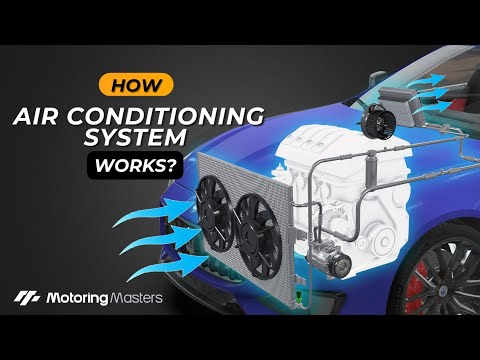
Your car’s AC system works using refrigerant that absorbs and releases heat through a continuous loop:
-
The compressor pressurizes refrigerant gas.
-
The condenser removes heat from it with the radiator fan.
-
The expansion valve lowers pressure.
-
The evaporator absorbs cabin heat.
-
The blower motor pushes cool air inside.
Now let’s explain each part in detail.
Main Parts of a Car Air Conditioner
1. Compressor
What It Does
The compressor is the heart of the system. It compresses low-pressure refrigerant gas into high-pressure hot gas. This starts the cooling cycle.
It is usually mounted on the engine and powered by a belt (or electric motor in hybrid/EV vehicles).


Signs It Is Bad
-
The AC is blowing warm air
-
Loud clicking or grinding or Humming noise
Repair Cost Range (2026)
$400 – $1,200 depending on car model.
Can You Drive With a Bad Compressor?
Yes, but your AC will not cool. With driving bad AC compressor long-term may damage other AC components.
2. Condenser
What It Does
The condenser removes heat from the hot refrigerant gas and turns it into liquid. The condenser is located next to the car’s front bumper grill and before the radiator.

Signs It Is Bad
-
Weak cooling
-
Refrigerant leaks near the front bumper
-
Overheating engine
-
Visible damage from road debris
Repair Cost Range
$300 – $900
Can You Drive With a Bad Condenser?
Yes, but cooling performance will drop significantly.
3. Evaporator
What It Does
The evaporator absorbs heat from inside the cabin. It is located behind the dashboard.
Warm air passes over cold evaporator coils and becomes cool before entering the cabin.

Signs It Is Bad
-
The AC blows warm air
-
Musty smell from vents
-
Water is leaking inside the cabin
-
Weak airflow
- AC Blend actuator is stuck open.
Repair Cost Range
$600 – $1,500 (Cost of AC labor charge is high because dashboard removal is required)
Can You Drive With a Bad Evaporator?
Yes, but no cooling and possible moisture issues inside the car. If evaporator was block by dirt perticle should be clean the evaporator by water or some chemical spray.
4. Expansion Valve
What It Does
The expansion valve controls refrigerant flow into the evaporator and reduces pressure to create cooling.

Signs It Is Bad
-
The AC is blowing warm air
-
Frost on AC lines
-
Fluctuating cooling
-
High pressure readings
- Sometimes, while the AC on hissing noise, if the expansion valve was stuck
Repair Cost Range
$200 – $600
Can You Drive With a Bad Expansion Valve?
Yes, but cooling will be inconsistent.
5. Receiver Dryer
What It Does
The receiver dryer removes moisture and filters debris from refrigerant.
Moisture inside the system can cause serious damage.

Signs It Is Bad
-
AC not cooling
-
System contamination
-
Refrigerant leaks
Repair Cost Range
$150 – $400
Can You Drive With a Bad Receiver Dryer?
Not recommended. Moisture can damage the entire AC system.
6. Blower Motor
What It Does
The blower motor pushes cooled air from the evaporator into the cabin.
Without it, you won’t feel airflow.

Signs It Is Bad
-
No air from vents
-
Weak airflow
-
Strange noise from the dashboard
Repair Cost Range
$200 – $700
Can You Drive With a Bad Blower Motor?
Yes, but airflow will be very weak or nonexistent.
7. AC Pressure Switch
What It Does
This sensor monitors refrigerant pressure and protects the system from damage.
Signs It Is Bad
-
Compressor not engaging
-
AC cuts off randomly

Parts of a Car Air Conditioner: Guide & Repair Costs 2026
Repair Cost Range
$100 – $350
Can You Drive With a Bad Pressure Switch?
Yes, but the system may shut down to protect itself.
Car AC Components Diagram
FAQ (Parts of a Car Air Conditioner)
Q) What Are the 5 Main Components of a Car AC System?
A) The five primary components are:
-
Compressor
-
Condenser
-
Evaporator
-
Expansion valve
-
Receiver dryer
- Pressure switch
Other supporting parts include the blower motor and pressure switches.
Q) What Is the Most Expensive AC Part to Replace?
A) The compressor and evaporator are usually the most expensive due to labor costs.
Q) How Do I Know Which AC Part Is Bad?
A) Warm air → Compressor, refrigerant leak, or expansion valve
Bad smell → Evaporator
No airflow → Blower motor
AC not turning on → Pressure switch
Diagnosis tools like pressure gauges help confirm.
Q) Can I Replace Car AC Parts Myself?
A) Some parts, like the blower motor or the pressure switch, are DIY friendly.
However:
-
Compressor
-
Evaporator
-
Refrigerant recharge
Require professional tools and certification.
Final Thoughts
Your car’s air conditioning system is not complicated once you understand the parts. Each component plays a specific role in keeping you cool and comfortable.
Knowing these parts helps you:
-
Diagnose problems early
-
Avoid unnecessary repair bills
-
Speak confidently with mechanics
-
Maintain your vehicle properly
Next time your AC stops cooling, you’ll know exactly where to start.
Stay cool and drive safe.